
Tech Stack Decisions for Scaling Startups
Strategic insights on choosing the right technology stack for your growing startup.

Sameer Kashyap
Founder & CEO
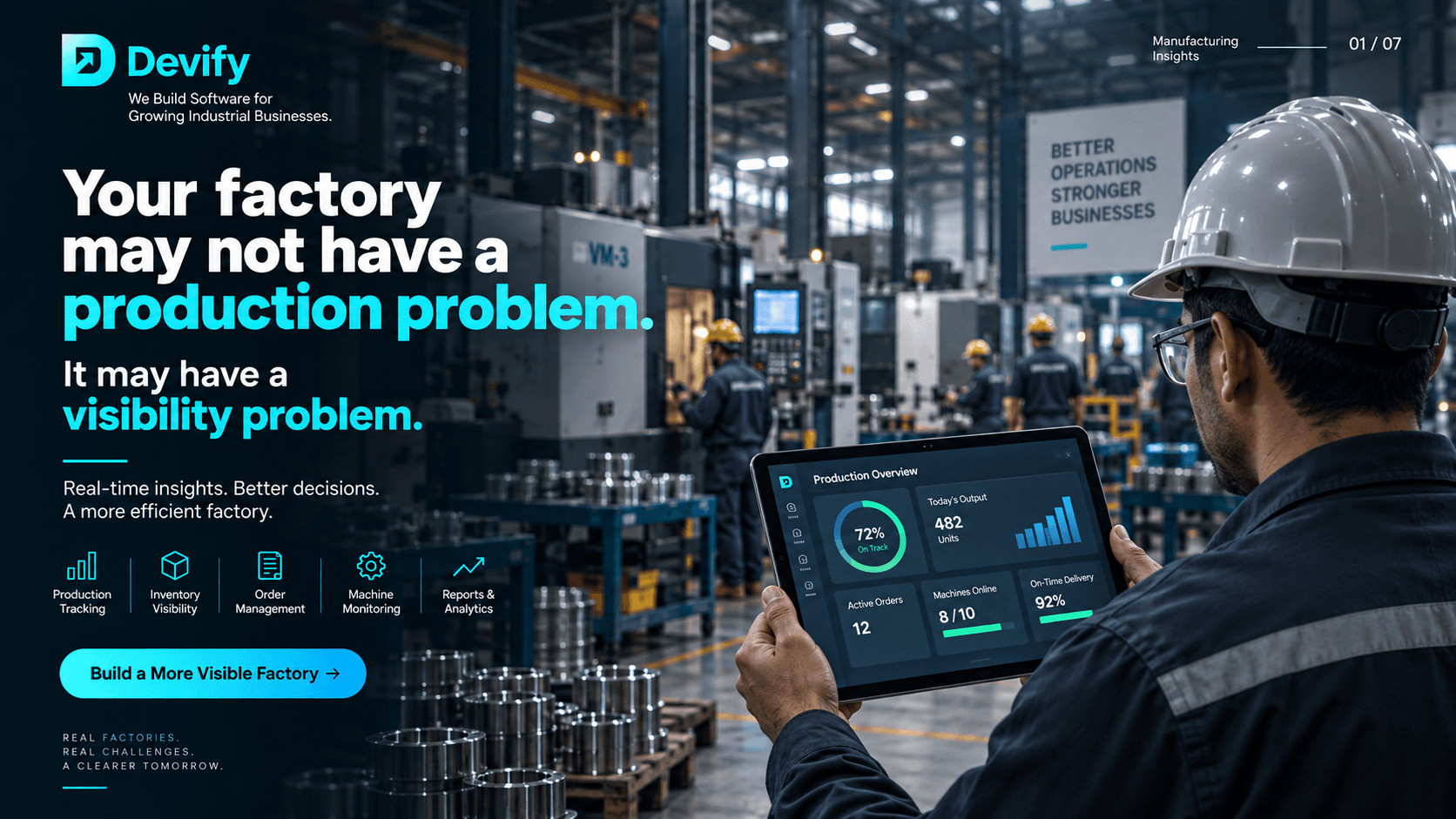
Many manufacturing businesses don't have a production problem—they have a visibility problem. When production, inventory, orders, machines and reports are managed across disconnected systems, getting a clear picture of the operation becomes difficult. Here's why manufacturing visibility matters and where businesses can start digitizing their operations.
A factory can be producing efficiently and still be difficult to manage. The problem isn't always production capacity, machines, people, or processes. Sometimes, the real problem is visibility. When production updates are scattered across messages, inventory is maintained in spreadsheets, order status requires multiple phone calls, and management reports take hours to prepare, getting a clear picture of the operation becomes difficult. The result is a visibility gap. Manufacturing visibility means having a clear and accessible view of what is happening across important parts of the operation. For example: The objective isn't simply to collect more data. The objective is to make important operational information easier to see and act on. Production is one of the first areas where visibility can become difficult. A typical production workflow may involve: Order → Job → Machine → Operator → Planned Quantity → Produced Quantity → Rejected Quantity → Completion If these updates are recorded in different places, answering a simple question such as "How much of today's production is complete?" can require several follow-ups. A centralized production view can provide information such as: Example: The value comes from turning operational data into information management can understand quickly. Inventory is another area where disconnected information can create uncertainty. Manufacturing operations may need to track: Without a reliable view, teams may spend time checking different records before knowing what is actually available. A centralized inventory view can help answer three basic questions: What do we have? What is reserved? What is available? It can also help identify items that are approaching minimum stock levels. The right inventory workflow, however, depends on the manufacturer's actual operation. Every business does not need the same inventory system. An order doesn't stop being important after it is received. Management may need to know: A simple order workflow could move through stages such as: New → Confirmed → In Production → Quality Check → Ready → Dispatched → Completed When order information is connected with production and dispatch, teams can spend less time manually asking for updates. Machines can have a significant impact on production. But knowing that a machine stopped is only the beginning. A useful operational view can capture: Consistently recording this information can help manufacturers identify recurring operational issues. The objective isn't simply to collect machine data. It is to make that information useful for operational decisions. Many manufacturing businesses already have reports. The question is: How long does it take to get the report management actually needs? A manufacturing operation may need reports covering: If someone has to manually collect information from several sources every time management asks a question, reporting itself becomes an operational workload. The goal of digitization should be to make important information available more quickly and consistently. It can be tempting to conclude that a manufacturer needs a large ERP system. But that isn't always the right starting point. A better question is: "Where is the operational information currently getting lost, delayed, duplicated, or disconnected?" The answer could be: The right technology should follow the problem. Problem first. Business impact second. Technology third. Every manufacturer has its own workflow. A fabrication company may operate differently from an auto-component manufacturer. A machine shop may have different production and quality processes from a packaging company. That's why manufacturing digitization shouldn't begin with: "Which software package should we install?" It can begin with: "How does your operation actually work today?" Understand the workflow. Find the bottleneck. Measure the impact. Then determine what should be digitized. This approach can lead to a much more practical technology solution. Before investing in a major software project, consider these questions: How are customer orders received and tracked? How is production planned and updated? How do you know your current raw material and finished-goods stock? Where are inspections, rejects, and rework recorded? How does the team know what is ready and what is pending? How long does it take to produce the numbers management needs? What is already working? What is still being handled manually? Where is information duplicated? Where do people have to repeatedly follow up? These questions can reveal where a real digital opportunity exists. Manufacturing digitization isn't about adding technology for the sake of technology. It's about creating better visibility into the operation. That can mean: The exact solution depends on the manufacturer's workflow and the problems that actually matter. A factory doesn't necessarily need more software. It may need a clearer view of the information and processes it already has. When orders, production, inventory, and reporting become easier to understand, management can spend less time searching for information and more time acting on it. At Devify, we help manufacturing businesses digitize their operations with software built around the way they actually work. Start with the workflow—not the software. Talk to Devify about your manufacturing workflow.Your Factory May Not Have a Production Problem. It May Have a Visibility Problem.
What Is Manufacturing Visibility?
1. Production Visibility
2. Inventory Visibility
3. Order Visibility
4. Machine and Downtime Visibility
5. Management Reporting
The Problem Isn't Always "No Software"
Start With the Workflow, Not the Software
What Should Manufacturers Look At First?
Orders
Production
Inventory
Quality
Dispatch
Reporting
Current Software
The Goal Isn't More Software. It's Better Control.
Final Thought
Strategic insights on choosing the right technology stack for your growing startup.
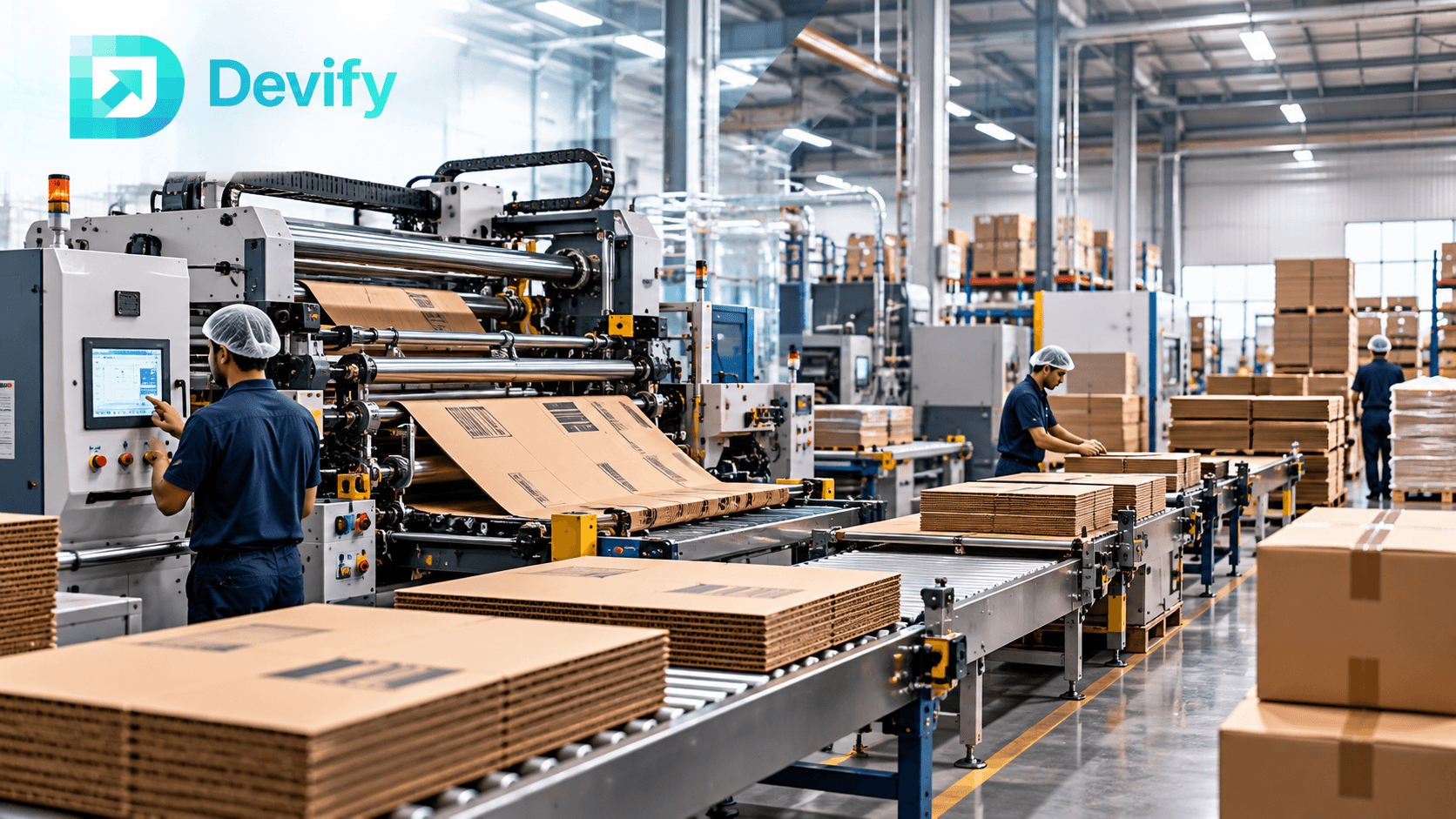
Learn how packaging manufacturers manage production, inventory, customer orders, quality control and dispatch, and how modern manufacturing software can improve factory operations.
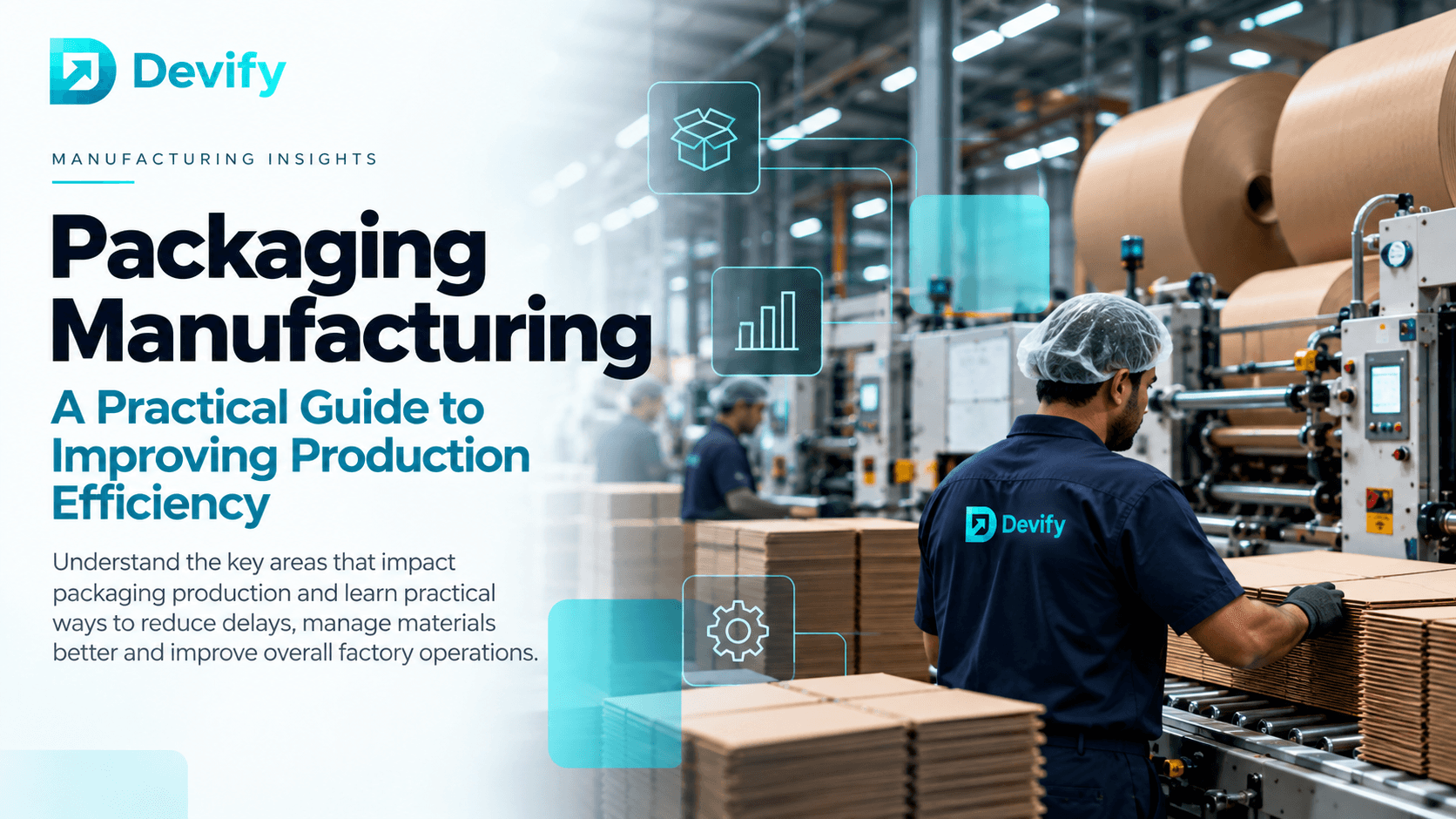
Learn how packaging manufacturers can improve production efficiency, reduce downtime, manage materials, optimize changeovers, track orders, and improve day-to-day factory operations.