
Tech Stack Decisions for Scaling Startups
Strategic insights on choosing the right technology stack for your growing startup.

Sameer Kashyap
CEO & Founder
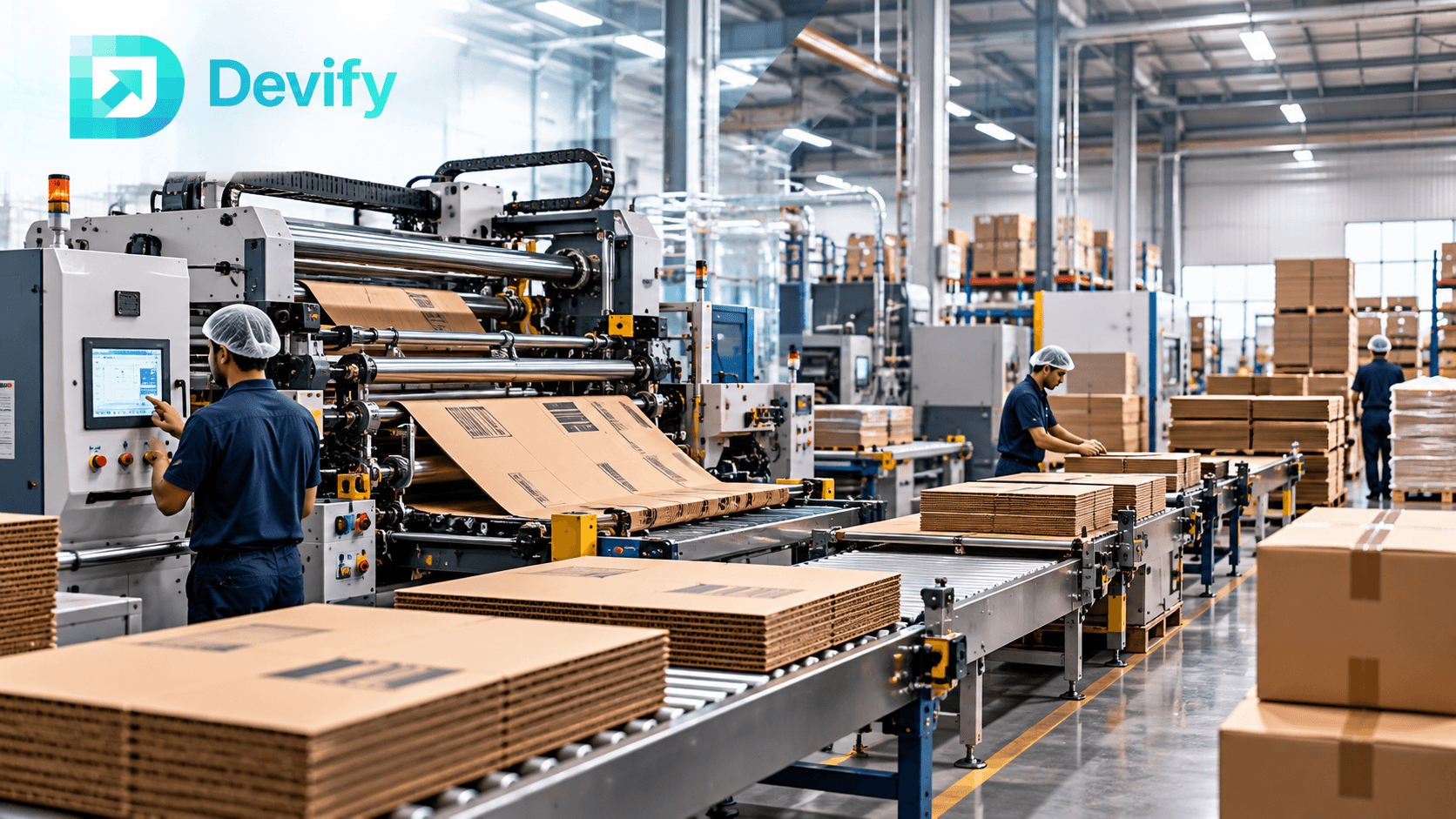
Learn how packaging manufacturers manage production, inventory, customer orders, quality control and dispatch, and how modern manufacturing software can improve factory operations.
Packaging manufacturing is a complex operation where production, raw materials, customer orders, machinery, quality control and delivery schedules all need to work together. For a growing packaging manufacturer, managing these activities through spreadsheets, paper records, phone calls and disconnected systems can become increasingly difficult. A typical packaging factory may handle dozens or hundreds of production jobs at the same time. Each job can have different materials, dimensions, printing requirements, quantities and delivery deadlines. This makes production planning, packaging inventory management and order tracking important parts of everyday operations. Modern manufacturing software can help packaging companies bring these processes together and create better visibility across the factory. Packaging manufacturing is the process of producing packaging products for businesses and consumers. Depending on the type of factory, this can include: Although these products are different, most packaging manufacturers have similar operational requirements. A customer order must be received, specifications must be confirmed, materials must be available, production must be scheduled, the job must be manufactured and inspected, and the finished products must eventually be dispatched. The packaging production process generally moves through several stages. The process usually starts with a customer requirement. A packaging order can contain details such as: Accurate order information is important because production teams depend on these specifications when creating the manufacturing job. Once the order is confirmed, the production team needs to determine when and how it will be manufactured. Production planning may involve: A clear production schedule helps supervisors understand which jobs should be running and which jobs are waiting. Raw materials are one of the most important parts of packaging manufacturing. Depending on the product, manufacturers may use: Without accurate inventory information, a production job can be scheduled even when the required material is not available. Effective packaging inventory management helps manufacturers understand current stock, reserved materials, consumption and upcoming requirements. After materials are available, the job moves into production. Depending on the packaging product, manufacturing may involve processes such as: At this stage, production teams need to know the status of every active job. A simple workflow could look like: Planned → Material Allocated → In Production → Quality Check → Completed → Packed → Dispatched This provides management with a clearer view of what is happening on the shop floor. Quality control is another important part of packaging production. Depending on the product, manufacturers may need to check: Recording quality information against individual production jobs can create a useful production history. It also makes it easier to identify recurring quality issues and investigate where problems occurred. As a packaging business grows, operational complexity increases. Many factories still rely on spreadsheets, paper records or messaging applications to track jobs. This can make it difficult to know the current status of production. Sales teams may know what customers have ordered while production teams know what is currently running. Without a connected system, these two views can become disconnected. A job may be ready for production but cannot begin because the required raw materials are unavailable. Better material planning can help identify these problems earlier. Holding too much stock can also create unnecessary costs. Manufacturers need visibility into actual consumption and upcoming production requirements. When many production jobs are active at the same time, manually tracking each order becomes difficult. Teams need a simple way to see which jobs are pending, in production, delayed or completed. Management teams often need more than a list of completed orders. They may also need information about: Packaging manufacturing software is a digital system that helps packaging companies manage their manufacturing operations. Depending on the system, it can include: Create production jobs, assign stages and monitor manufacturing progress. Track raw materials, finished goods, stock movements and material availability. Connect customer orders with production jobs and delivery requirements. Create structured work orders containing product specifications, quantities, materials and deadlines. Monitor machine activity, downtime and production information. Record inspections, rejected quantities and quality issues. Track completed products through packing and dispatch. Moving manufacturing workflows into a connected system can improve operational visibility. Managers can see which jobs are planned, running, delayed or completed without collecting updates from multiple people. Production requirements can be connected with available materials. This helps teams identify potential shortages before production begins. Customer orders can be connected directly to their associated production jobs. For example: Order Received ↓ Production Planned ↓ Material Allocated ↓ Production Started ↓ Quality Checked ↓ Completed ↓ Dispatched This makes it easier to understand the current state of an order. Management can make decisions using current operational information rather than relying entirely on manual reports. Production activity can be recorded against individual jobs, creating a clearer history of when work started, how much was produced and when it was completed. There is no single system that fits every packaging factory. Before choosing software, manufacturers should first understand their own operational workflows. Important capabilities can include: The ability to schedule jobs according to machine capacity, deadlines and production requirements. A simple way to understand the status of every production job. Visibility into raw materials, work-in-progress and finished goods. The ability to connect customer orders with their corresponding production jobs. A record of previous manufacturing activity for reporting and analysis. Management dashboards that provide useful information about production, inventory and pending work. Different teams should be able to access the information relevant to their responsibilities. Spreadsheets can be useful for small manufacturing operations. The problem appears when a business begins using multiple spreadsheets for different departments. One file might contain customer orders. Another might contain inventory. Another might contain production schedules. Another might contain dispatch information. The challenge is keeping all of these records synchronized. A connected manufacturing operations platform can bring these workflows together. Manufacturers also do not need to digitize everything at once. A practical approach is to start with one important workflow such as production tracking, inventory management or order management and gradually expand from there. Packaging manufacturing is becoming increasingly data-driven. Customers expect reliable delivery information. Production teams need better visibility. Management teams need faster reporting. Procurement teams need accurate material requirements. However, digital transformation does not necessarily mean implementing a complicated enterprise system. For many growing packaging manufacturers, the first objective is simply being able to answer a few important questions quickly: When this information is available in one system, teams can spend less time collecting information and more time managing the factory. Packaging manufacturing involves many moving parts, including customer orders, raw materials, production planning, machinery, quality control and delivery. As a packaging company grows, managing these processes manually becomes increasingly difficult. Modern packaging manufacturing software can connect production planning, inventory management, work orders, order tracking, quality control and dispatch into one operational workflow. The objective is not simply to replace paper or spreadsheets. The objective is to create better visibility, stronger coordination and greater control over everyday manufacturing operations. For packaging manufacturers looking to modernize their factories, digitizing the workflows that create the most manual work or information gaps can be a practical starting point. Devify builds software for growing industrial businesses. For packaging manufacturers, digital solutions can include production management, inventory tracking, order workflows, work-order management, dashboards, integrations and custom software designed around existing manufacturing processes. Visit to www.devify.co.in/manufacturing learn more. Ready to Modernize Your Packaging Operations? Managing production, inventory, orders, and daily manufacturing workflows becomes harder as your packaging business grows. Devify builds custom manufacturing software for growing industrial businesses, helping teams bring production, inventory, order management, work orders, and operational reporting into one connected system. Want to see what a digital manufacturing workflow could look like for your packaging business?Packaging Manufacturing: A Complete Guide to Production, Inventory and Order Management
What Is Packaging Manufacturing?
The Packaging Manufacturing Process
1. Customer Order
2. Production Planning
3. Raw Material Management
Production and Machine Operations
Quality Control in Packaging Manufacturing
Common Challenges Faced by Packaging Manufacturers
Manual Production Tracking
Lack of Order Visibility
Raw Material Shortages
Excess Inventory
Difficult Job Tracking
Limited Production Data
What Is Packaging Manufacturing Software?
Production Management
Inventory Management
Order Management
Work Order Management
Machine Tracking
Quality Management
Dispatch Management
Benefits of Digital Production Management
Better Production Visibility
Better Inventory Control
Improved Order Tracking
Faster Decision-Making
Better Accountability
What Should Packaging Manufacturers Look for in Manufacturing Software?
Production Planning
Real-Time Job Tracking
Inventory Management
Order-to-Production Tracking
Production History
Dashboards and Reports
Role-Based Access
Moving from Spreadsheets to Digital Manufacturing
The Future of Packaging Manufacturing
Conclusion
About Devify
Devify — Software for Growing Industrial Businesses.
Strategic insights on choosing the right technology stack for your growing startup.
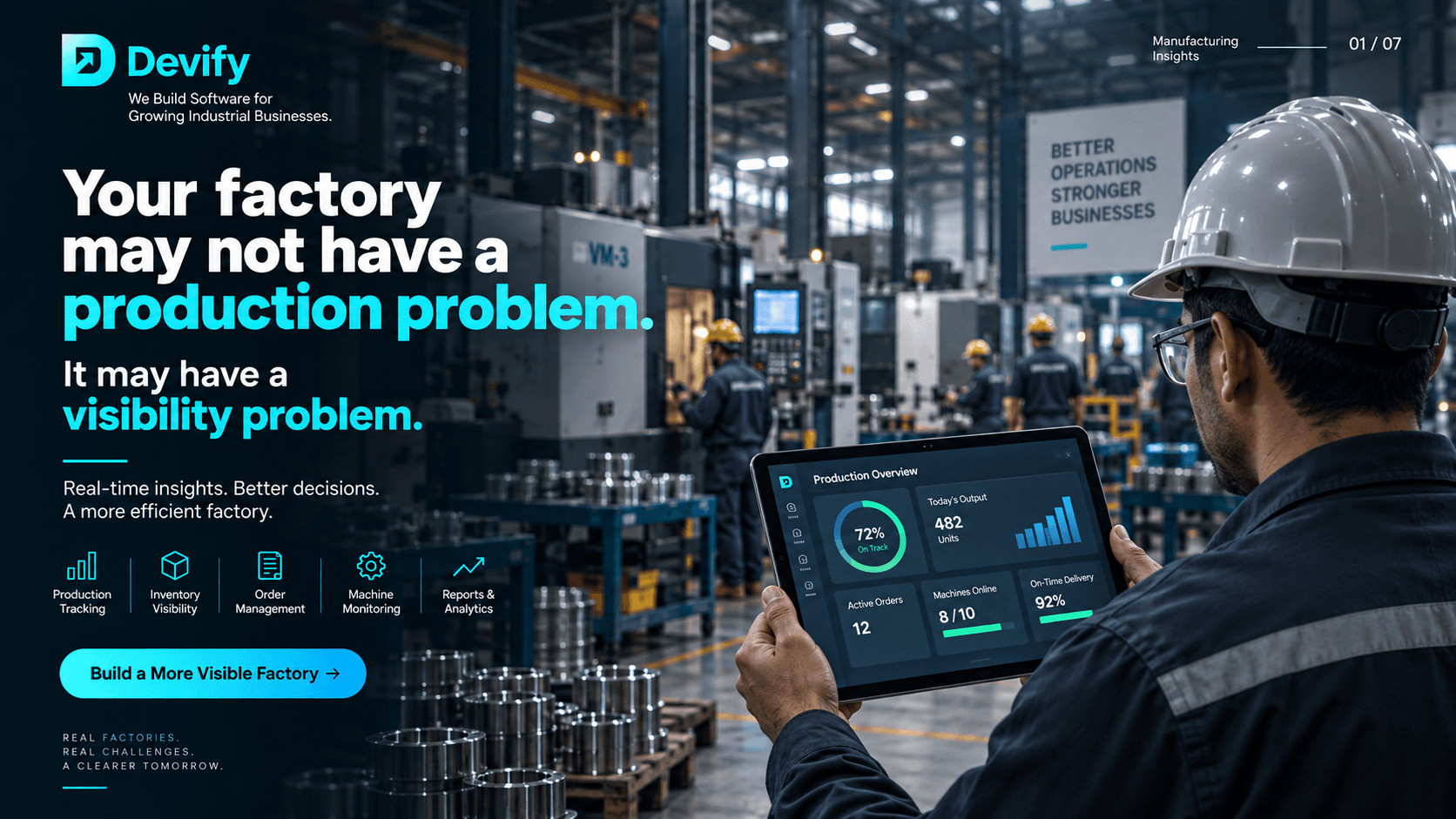
Many manufacturing businesses don't have a production problem—they have a visibility problem. When production, inventory, orders, machines and reports are managed across disconnected systems, getting a clear picture of the operation becomes difficult. Here's why manufacturing visibility matters and where businesses can start digitizing their operations.
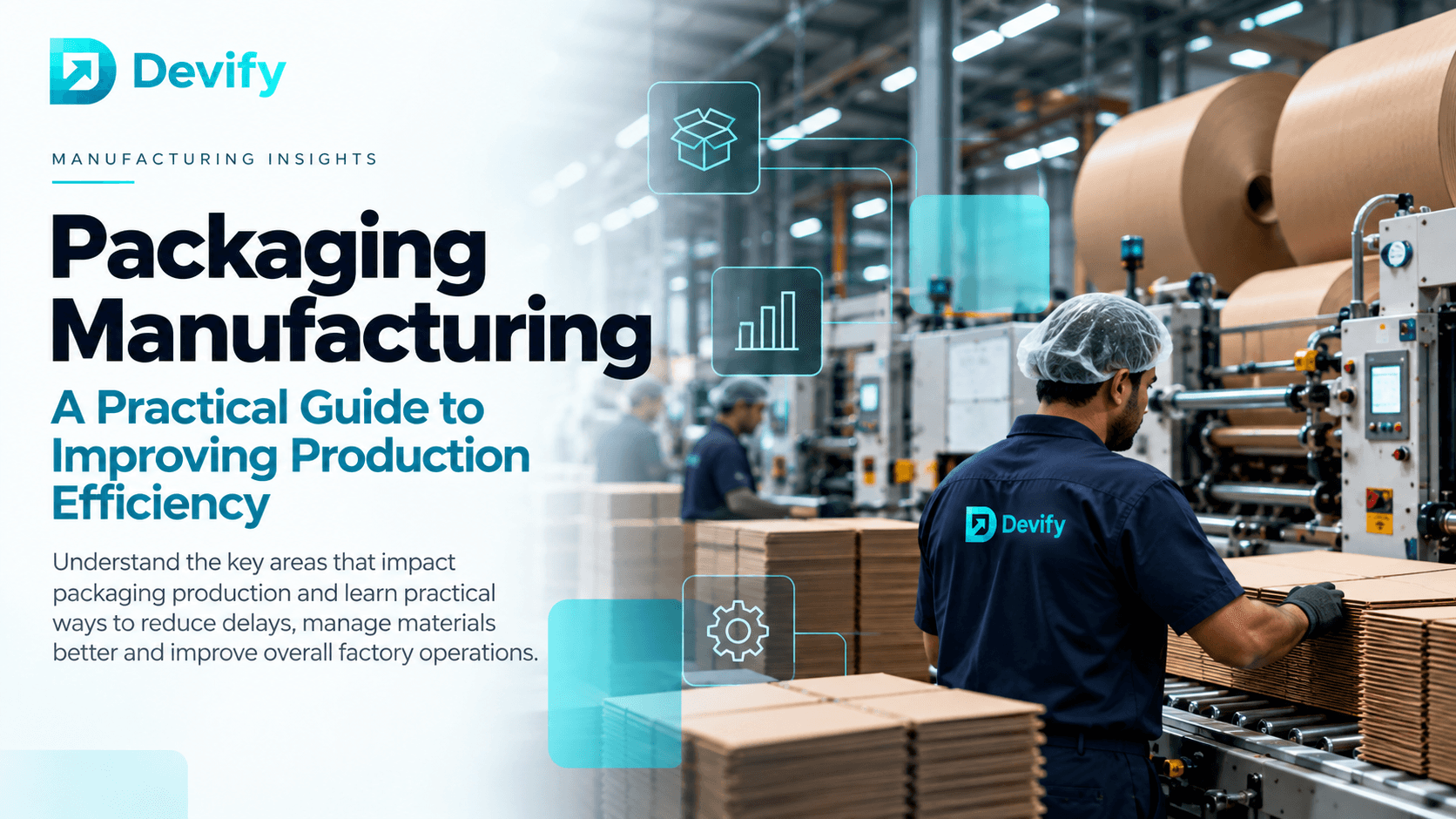
Learn how packaging manufacturers can improve production efficiency, reduce downtime, manage materials, optimize changeovers, track orders, and improve day-to-day factory operations.