
Tech Stack Decisions for Scaling Startups
Strategic insights on choosing the right technology stack for your growing startup.

Sameer Kashyap
CEO & Founder
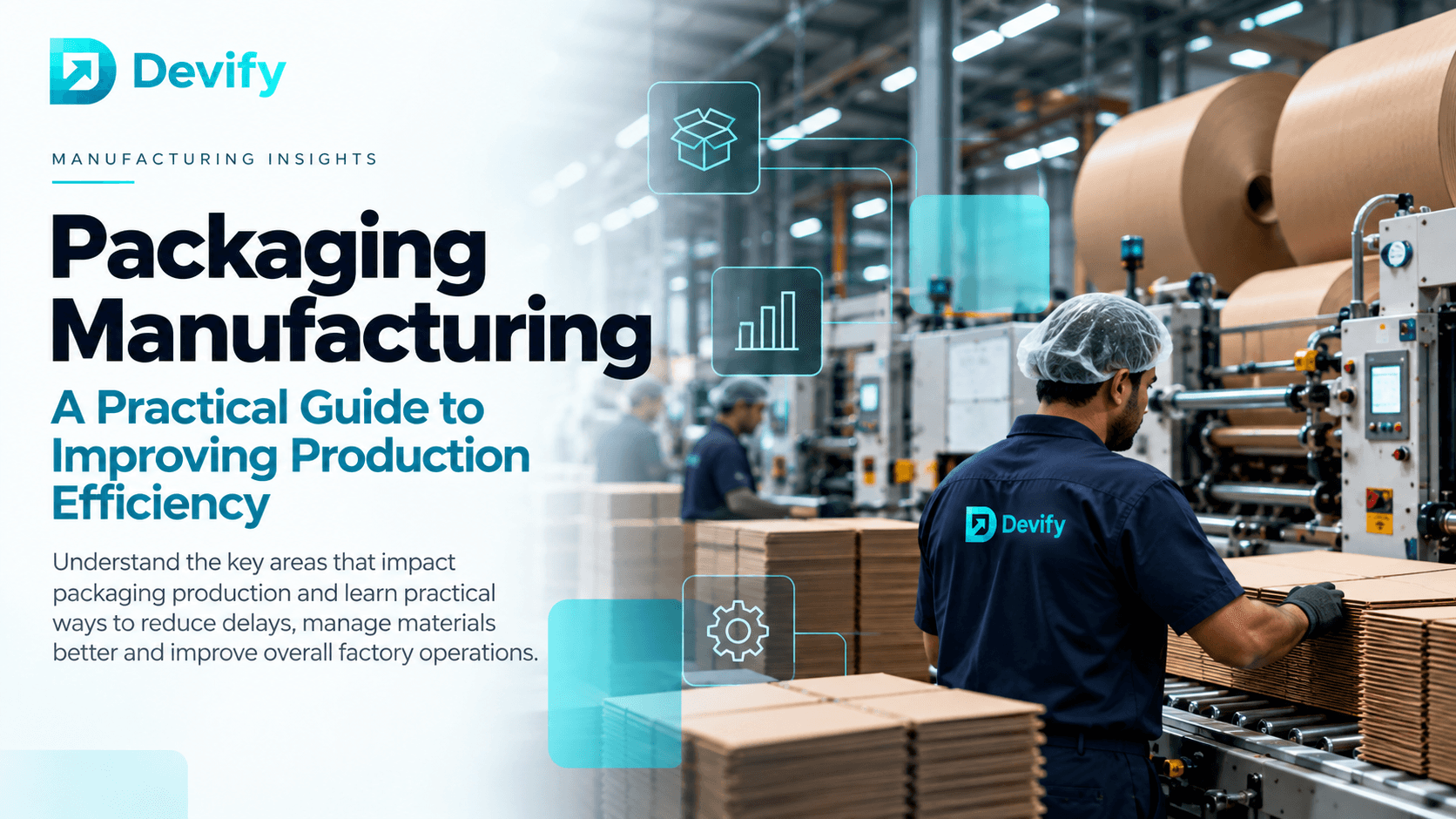
Learn how packaging manufacturers can improve production efficiency, reduce downtime, manage materials, optimize changeovers, track orders, and improve day-to-day factory operations.
Packaging Manufacturing: A Practical Guide to Improving Production Efficiency Packaging manufacturing is a fast-moving and highly coordinated industry. A packaging factory may need to manage raw materials, customer orders, production schedules, machines, operators, quality checks, finished goods, and dispatches at the same time. As production volumes increase, managing all of these activities becomes more difficult. A packaging manufacturer can have enough machines and enough orders, yet still lose production time because materials are not ready, machines experience downtime, changeovers take too long, or teams do not have the information they need at the right time. That is why improving packaging manufacturing operations is not only about increasing machine capacity. It is also about improving the way production, inventory, orders, people, and machines work together. In this guide, we look at the most important areas manufacturers can improve to build a more efficient packaging production operation. Packaging manufacturing is the process of producing packaging materials and products used to protect, transport, store, and present goods. Depending on the type of packaging company, the manufacturing process may include: A typical packaging manufacturing process may move through several stages: Raw Materials → Production Planning → Printing → Converting → Finishing → Quality Check → Packing → Dispatch Every stage affects the next one. For example, a shortage of paper or board can delay production. A machine breakdown can move the entire production schedule. A longer-than-expected changeover can delay several customer orders. This makes coordination a critical part of packaging manufacturing. Production planning is one of the most important parts of a packaging factory. A production schedule must consider more than customer demand. Production teams also need to consider machine capacity, raw material availability, job priority, operator availability, setup requirements, and customer deadlines. For example, a production schedule might contain: But a scheduled job is not necessarily a ready job. Before production begins, the factory may need to confirm: Effective packaging production planning means understanding both what needs to be produced and whether the factory is ready to produce it. Raw materials have a direct effect on packaging production. Depending on the manufacturing process, a packaging company may use: A production machine may be ready, but production cannot begin if the required material is unavailable. This makes material planning an important part of packaging manufacturing. A useful workflow is: Customer Order → Production Job → Material Requirement → Material Availability → Production This allows production teams to identify potential shortages before the job reaches the production floor. Better material planning can also help reduce unnecessary production interruptions and improve inventory control. Machine downtime is one of the most visible sources of production loss in a packaging factory. However, downtime does not always mean a major machine breakdown. Production can also stop because of: Because of this, manufacturers should record not only how long a machine was stopped, but also why it stopped. For example: The value of downtime tracking comes from identifying recurring patterns. If setup delays happen every day, they may represent a process problem rather than an isolated incident. Changeovers are an important part of packaging production. A machine may need to be adjusted when switching between: A machine can be completely healthy and still spend significant time waiting during setup. For example: Job A → Changeover → Job B If one changeover takes 30 minutes and several changeovers occur during a shift, the total lost production time can become significant. Manufacturers can improve changeovers by tracking: The goal is to make changeovers more predictable and reduce unnecessary waiting. Work-in-progress, commonly called WIP, can become difficult to manage as production volume increases. A packaging factory may have jobs that are: Without clear WIP tracking, teams may not know the real status of a job. A simple WIP view could look like this: Understanding WIP helps production managers identify bottlenecks and prioritize the next operation. Packaging manufacturers often handle many customer orders at the same time. A single order may move through: Order Received → Planned → Materials Ready → In Production → Quality Check → Packed → Ready for Dispatch → Dispatched Every stage provides important information. For example: Planned: Has the production team scheduled the job? Materials Ready: Are all required materials available? In Production: Is the machine currently processing the order? Quality Check: Has manufacturing been completed successfully? Ready for Dispatch: Can the order leave the factory? Having clear order stages makes it easier for sales, production, stores, quality, and dispatch teams to work from the same process. Quality issues can affect more than the final product. A manufacturing error can lead to: Examples of packaging quality problems include: Recording quality problems at the production stage makes it easier to identify recurring causes. Manufacturers can then examine whether a problem is related to a particular: Manufacturers do not necessarily need hundreds of metrics. The most useful metrics are the ones that help explain what is happening on the factory floor. Important packaging manufacturing KPIs can include: How much was actually produced? How closely did actual production follow the planned schedule? How much time was lost because machines were unavailable? How long did machine setup take between jobs? How often did production stop because required materials were unavailable? How much production required correction or reprocessing? How many orders were completed according to the planned delivery date? Tracking these metrics consistently can help manufacturers identify recurring operational problems. Packaging manufacturing works as a connected system. A customer order can affect production. Production affects material consumption. Material consumption affects inventory. Machine downtime affects production schedules. Production delays can affect dispatch. This means individual departments cannot always work independently. A more connected workflow looks like: Sales → Planning → Inventory → Production → Quality → Packing → Dispatch When information moves clearly between these stages, production teams can react faster to problems. The purpose of manufacturing data is not to create more reports. The purpose is to make better operational decisions. Management should be able to answer questions such as: Good operational data turns daily manufacturing activity into information that managers can actually use. Packaging manufacturers can begin improving operations by focusing on a few practical steps: Document how an order moves from confirmation to dispatch. Compare planned production time with actual production time. Track why machines stop, not just how long they stop. Understand which jobs require longer setup times. Know what materials are required before production begins. Understand where every important production job currently sits. Look for problems that happen repeatedly rather than treating every delay as an isolated incident. Give managers a simple view of production, machines, inventory, orders, and delays. Improving packaging manufacturing efficiency is not simply about producing more units. It is about making the entire operation more predictable. A better-managed packaging factory can have a clearer understanding of: When these areas are managed together, manufacturers can identify bottlenecks earlier and make better decisions. Packaging manufacturing is a complex environment where small operational problems can quickly become larger production issues. Material shortages, machine downtime, long changeovers, unclear WIP, quality problems, and production delays can all affect the final delivery schedule. The first step toward improvement is understanding what is actually happening inside the factory. By measuring production performance, tracking materials, monitoring downtime, improving changeovers, and connecting production with orders and inventory, packaging manufacturers can build more efficient and predictable operations. At Devify, we build software around real manufacturing workflows, helping industrial businesses connect processes such as production, inventory, orders, machine operations, and operational reporting. The objective is simple: Build technology around the way the factory works. Devify builds custom software for growing industrial businesses. For packaging manufacturers, software can be designed around workflows such as: Production Planning → Job Tracking → Inventory → Machine Downtime → Orders → Quality → Dispatch → Reporting Learn more about Devify's manufacturing solutions at www.devify.co.in/manufacturing. Ready to Modernize Your Packaging Operations? Managing production, inventory, orders, and daily manufacturing workflows becomes harder as your packaging business grows. Devify builds custom manufacturing software for growing industrial businesses, helping teams bring production, inventory, order management, work orders, and operational reporting into one connected system. Want to see what a digital manufacturing workflow could look like for your packaging business?What Is Packaging Manufacturing?
1. Improve Packaging Production Planning
Job Product Quantity Machine Due Date JOB-101 Corrugated Boxes 10,000 Line 1 Monday JOB-102 Printed Cartons 8,000 Line 2 Monday JOB-103 Shipping Boxes 15,000 Line 1 Tuesday 2. Manage Raw Materials More Efficiently
3. Reduce Machine Downtime
Downtime Reason Duration Setup 48 min Material Shortage 31 min Maintenance 27 min Tool Change 22 min Quality Adjustment 16 min 4. Improve Changeover Time
5. Track Work-in-Progress
Job Production Stage Quantity Status JOB-201 Printing 8,000 Running JOB-202 Die Cutting 5,000 Waiting JOB-203 Folding 7,500 Completed JOB-204 Packing 4,000 In Progress 6. Keep Customer Orders Connected to Production
7. Reduce Rework and Quality Problems
8. Measure the Right Packaging Manufacturing KPIs
Production Output
Schedule Adherence
Machine Downtime
Changeover Time
Material Shortages
Rework
On-Time Delivery
9. Connect Production, Inventory, and Orders
10. Use Manufacturing Data to Improve Decisions
Practical Ways to Improve Packaging Manufacturing Operations
Map the Production Workflow
Track Actual Production Time
Record Downtime Reasons
Measure Changeovers
Connect Materials to Production Jobs
Monitor WIP
Review Recurring Problems
Create Clear Operational Reports
Why Packaging Manufacturing Efficiency Matters
Final Thoughts
About Devify
Devify — Software for Growing Industrial Businesses.
Strategic insights on choosing the right technology stack for your growing startup.
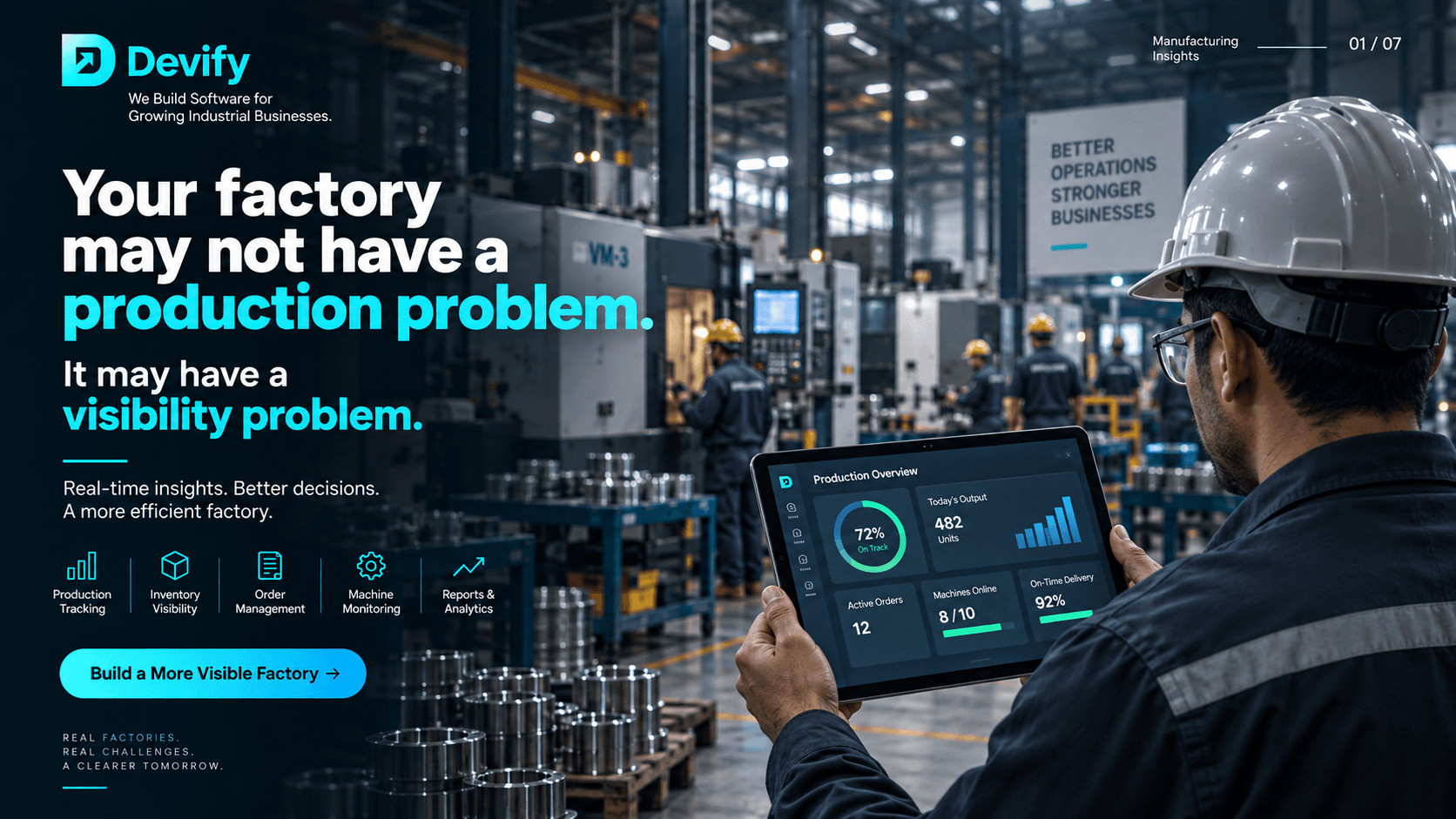
Many manufacturing businesses don't have a production problem—they have a visibility problem. When production, inventory, orders, machines and reports are managed across disconnected systems, getting a clear picture of the operation becomes difficult. Here's why manufacturing visibility matters and where businesses can start digitizing their operations.
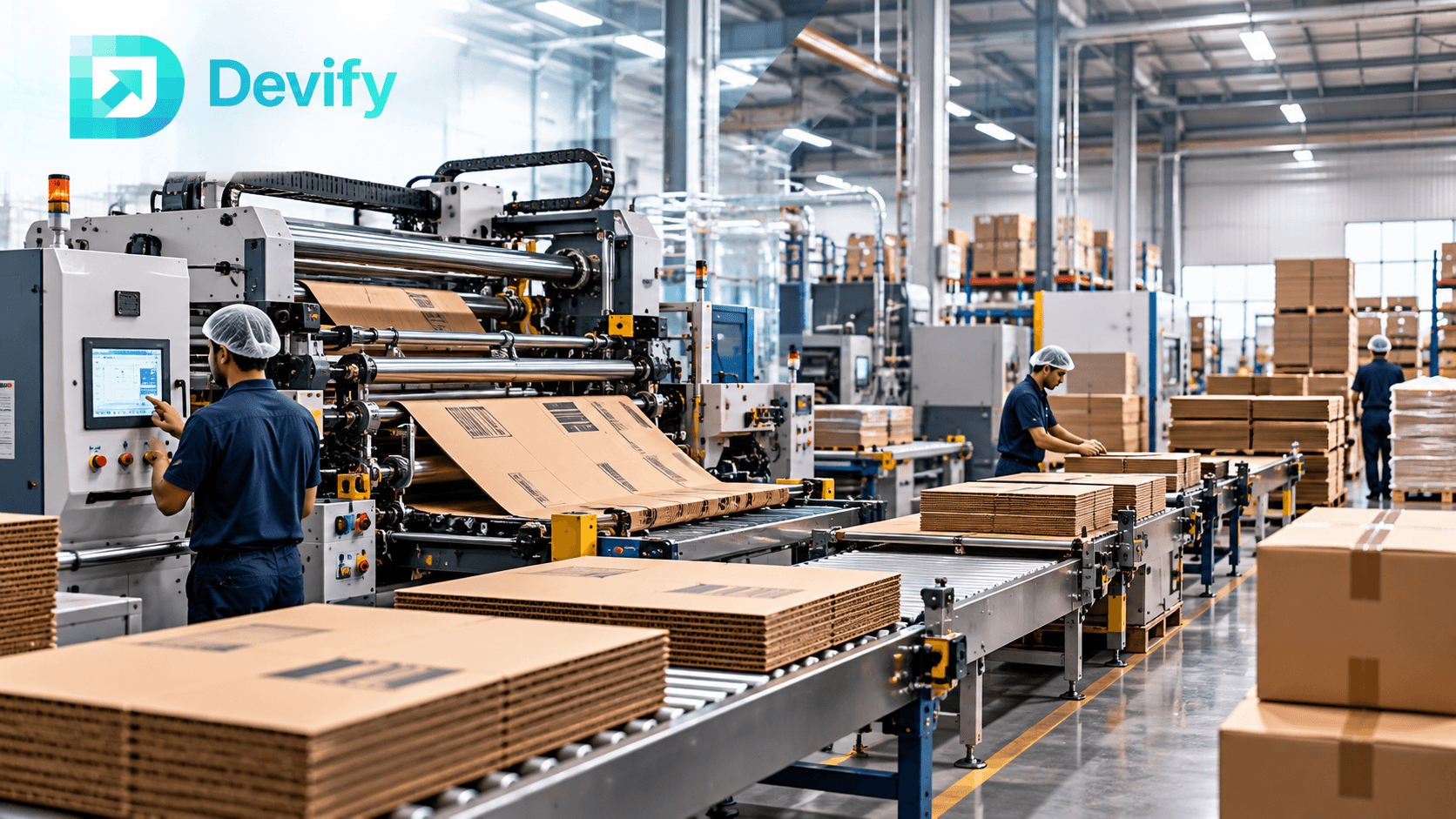
Learn how packaging manufacturers manage production, inventory, customer orders, quality control and dispatch, and how modern manufacturing software can improve factory operations.